
Source: CNC3
Almost five months after the central block at the Port-of-Spain General Hospital was condemned following the 6.9 earthquake which forced the immediate relocation of patients and staff—answers are being demanded as to when demolition and rehabilitation works will begin.
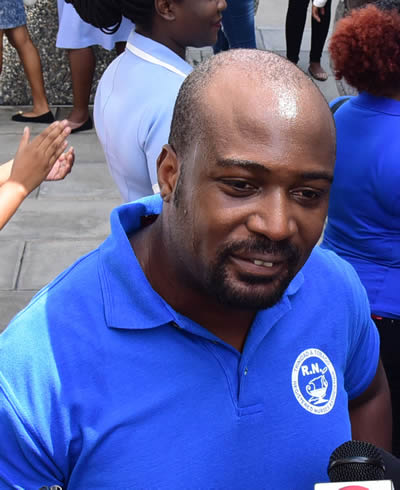
Urging Prime Minister Dr Keith Rowley to intervene, president of T&T Registered Nurses Association (TTRNA) Idi Stewart described the situation at the hospital as one which had reached “crisis point.”
Having dispatched a letter one week ago imploring Rowley to prioritise national spending patterns, Stewart questioned why plans were afoot to spend $850 million to build a new hospital in Sangre Grande when the existing facility was adequately meeting the needs of the residents at this time.
While Stewart did not dismiss the need for a modern facility within the Eastern Regional Health Authority (ERHA), he said urgent attention had to be paid to the POSGH.
He said, “Patients are being squeezed into the older part of the building which is more than 160 years old and was initially poorly constructed.”
“They are being placed in units not designed for this large influx of patients.”
Stewart claimed six wards had been compressed to fit within the physical dimensions which previously only housed the Ear, Nose and Throat Ward.
This, he said, had led to severe over-crowding and provided the perfect environment for cross-contamination.
Three weeks ago, the head nurses at the Casualty Department protested by staying away from work for one day in a bid to communicate their displeasure with the cramped conditions.
A male nursing assistant and scrub technician explained, “Due to the lack of available bed space, we have to hustle patients to leave before they are due to be discharged.”
“I am not sure how detrimental that is in the immediate sense but I know it is having a long-term effect because we have seen patients returning to us because complications have arisen and they come back for long-term care.”
He too criticised the move by hospital authorities to commandeer certain areas within the hospital to erect make-shift wards.
One such place was the area where patients would usually wait to have to have their prescriptions filled outside the pharmacy.
A visit to the hospital confirmed the area was now a temporary ward with curtain dividers being used to separate patients who were clearly visible to anyone in that space.
Complaining about the lack of privacy for both the staff and patients, a female nurse with more than 12 years experience, added: “Air- conditioned tents are now being used to store equipment and supplies because we have no space on the wards.”
“And yes, we are referring patients to other hospitals because our space is very limited now and we cannot accommodate them as before.”
Stewart said plans had been discussed in September 2011, relating to the construction of the main block being built on the south-east corner of the existing compound but this never came to fruition.
Indicating that users of the hospital were frustrated, Stewart said, “Staff and patients are agitated because it is an ongoing problem, it is a daily problem.”
“They are unable to get beds because they have moved from over 400 beds down to less than 100 beds so they are remaining in the Accident and Emergency longer now. They also have to remain on trolleys longer too…every thing is being affected.”
Accepting that the North West Regional Health Authority (NWRHA) had been doing everything possible to ensure the comfort of the patients in their care, Stewart said non-essential services had already been transferred to the St. James Infirmary.
However, he appealed to the Ministry of Finance to allocate direct funds towards the construction of a new central block at the Port-of-Spain General Hospital which would provide a capacity of 540 beds.
While the staff members are clamouring for some kind of protest, Stewart issued a special appeal for them to hold strain.
However, he cautioned that a shut-down may be looming if the authorities did not move to take immediate action to rectify the current situation.
Reporter: Anna-Lisa Paul


